Beyond the Warranty: Why an Independent Snagging Survey Belongs on Every New-Build Checklist

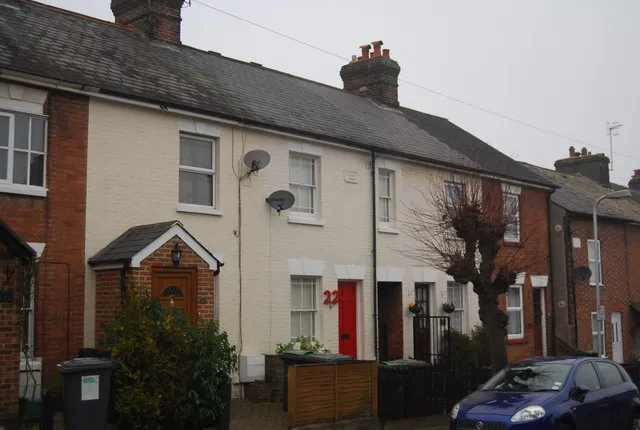
Photo: Diliff, CC BY-SA 3.0, via Wikimedia Commons
Buying a new-build home is often presented as a low-risk route into home ownership. The property is new, the developer provides a warranty and the buyer expects a finish that reflects modern standards. That expectation is reasonable, but it is not the same as an assurance that every detail has been inspected, tested and completed to a satisfactory standard. An independent snagging survey is not a criticism of the warranty system. It is a recognition of what that system does and does not do.
The warranty is insurance, not an inspection
A structural warranty such as NHBC Buildmark or an equivalent policy is an important safety net. It can protect the buyer against certain defined defects, particularly serious structural problems and water ingress, and it sets out a process for resolution. What it does not do is provide a comprehensive, room-by-room assessment of the property at the point of handover.
Warranty inspections are typically risk-based and focused on compliance with building regulations and warranty standards. They are not designed to identify every ill-fitting door, uneven plaster patch, damaged brick or missing sealant. Those items matter to the buyer because they affect daily use and, in some cases, the long-term performance of the building. The warranty is therefore best understood as insurance against major failure, not as a substitute for independent snagging.
What a snagging survey actually checks
A snagging survey is a detailed inspection of the finished property, usually carried out before legal completion where access can be arranged. It covers the visible and accessible fabric and fittings, including walls, ceilings, floors, doors, windows, kitchens, bathrooms, joinery, decoration, external elevations, drainage and services where they can be safely assessed.
The surveyor will look for incomplete work, poor workmanship, damage and items that do not function as intended. Examples include doors that catch on frames, kitchen units out of alignment, silicone seals that are incomplete, cracked tiles, uneven plaster, paint on glass or brickwork, missing trickle vents, poorly fitted skirting and external defects such as damaged render or incorrect ground levels. The report should be clear, photographed and prioritised so that the buyer can raise issues in a practical way.
The most frequent defects in UK new-builds
No two homes are identical, but certain themes recur. Decoration is a common area of complaint: poorly filled plaster, visible paint edges and uneven finishes. Joinery and doors frequently need adjustment. Bathrooms and kitchens may have sealant defects, misaligned units or poorly fitted accessories. External works often reveal damaged bricks, mortar smears, uneven paving or drainage covers set incorrectly.
Services deserve attention too. Heating controls, ventilation and drainage should be demonstrated and checked, not simply assumed to be working. In some cases, buyers discover that a component has been installed but not commissioned properly, or that an instruction manual has been left without a clear handover explanation. These are not necessarily major defects, but they are exactly the kind of issues that an independent survey can capture while the developer still has a commercial incentive to resolve them promptly.
Timing matters
The ideal moment for a snagging survey is before completion, once the property is sufficiently complete to inspect but before the buyer has accepted the keys and settled the final balance. Some developers allow access at this stage; others restrict it. Where pre-completion access is not possible, the survey should be arranged promptly after legal completion, before the buyer moves in and while the property is still in its initial warranty period.
Early inspection has two advantages. It creates a documented baseline of the property’s condition, and it gives the developer a clear list to work from before the buyer’s own furniture, alterations and daily life complicate the question of causation. The longer a defect goes unreported, the easier it becomes for responsibility to be disputed.
Using the report to get issues fixed
A good snagging report should be more than a long list of complaints. It should distinguish between items that are unsafe, items that affect weathertightness or function, and cosmetic matters that can be resolved over time. That prioritisation helps the buyer communicate with the developer’s customer care team without appearing unreasonable.
Buyers should submit the report in writing, keep a record of correspondence and request a dated schedule for remedial works. It is sensible to ask for confirmation when each item has been addressed, and to reinspect before accepting that a matter is closed. Where a developer disputes an item, the report provides independent evidence. Where the issue is serious, it may also support escalation through the warranty provider or, in some cases, legal advice.
Warranty timelines and the first year
The initial warranty period is valuable, but it is not a substitute for prompt action. Many warranties include a period during which the developer is responsible for remedying certain defects, followed by a longer structural warranty. The exact terms vary by provider and policy, so buyers should read the documentation rather than rely on a general assumption.
The first year of occupation is particularly important. Some defects only become apparent once the heating is used, the house has experienced heavy rain or the building has settled into normal use. Keeping a simple log of issues, with dates and photographs, makes any later claim easier to support. A snagging survey at handover and a follow-up inspection before the initial period ends can be a sensible combination.
Choosing an independent surveyor
The value of a snagging survey depends on independence. A surveyor who is not connected to the developer, the selling agent or the warranty provider can report what they see without commercial pressure. Buyers should ask what the inspection covers, whether photographs are included, how the report is structured and whether the surveyor has experience of the type of construction used.
It is also important to be realistic. A snagging survey is not a destructive investigation, and it cannot assess hidden elements that are covered up. It is a snapshot of the finished property at a point in time. Used properly, however, it gives the buyer a clear, evidence-based start to the relationship with their new home.
A practical conclusion
A new-build warranty has real value, but it should not be asked to do a job it was never designed to do. The warranty protects against defined risks over time; a snagging survey identifies the finish, function and workmanship issues that are present at handover. For a purchase of this size, commissioning an independent inspection is not an act of distrust. It is simply good practice.