When Your Ceiling Is Your Neighbour's Floor: Surveying a Flying Freehold

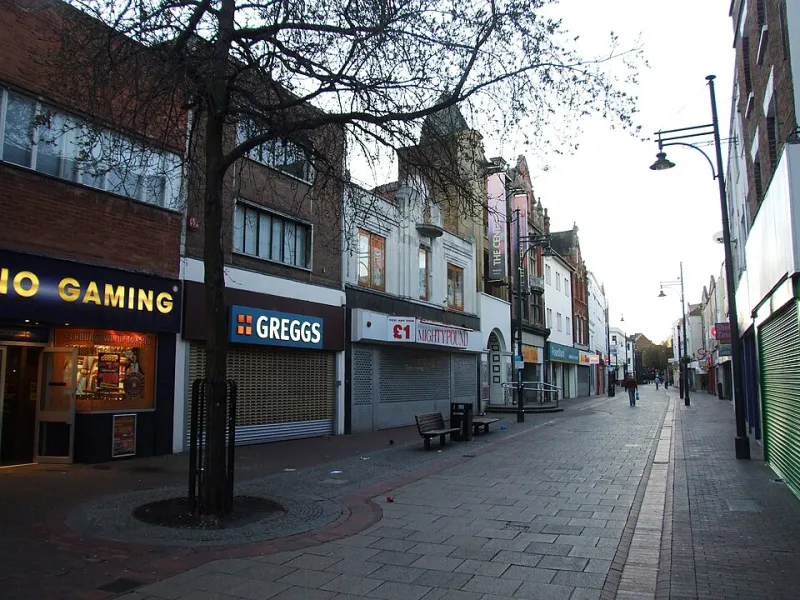
Photo: Evelyn Simak , CC BY-SA 2.0, via Wikimedia Commons
Most buyers approach a property assuming that ownership follows sensible lines: a plot, a boundary, a set of walls. A flying freehold disrupts that assumption. Part of the building you are buying sits vertically above or below land in separate ownership, so your ceiling may be a neighbour's floor, or your hallway may pass beneath their bedroom. The arrangement is common in older towns, particularly where terraces, converted houses and archways have been divided over the years, and it is rarely obvious from a viewing.
The building itself may be perfectly sound. What makes a flying freehold worth careful attention is the overlap between physical structure and legal responsibility. A surveyor can report on the former. Only a solicitor can resolve the latter, and a sensible purchase treats the two strands as a single investigation rather than separate boxes to tick.
What a flying freehold actually is
In practical terms, a flying freehold exists where the three-dimensional space of one ownership overlaps another. A first-floor room extending over a shared passageway, a cellar running beneath a neighbouring hall, an upper maisonette whose floor joists bear into the freehold next door: each is a variation on the same theme. It is distinct from a leasehold flat, although the two are often confused. A leasehold interest is granted by a landlord and defined in a lease. A flying freehold is a freehold title whose extent is, by its nature, stacked above or below someone else's.
The consequence is that the structure at the overlap is shared in function even where it is not shared in title. Support, weatherproofing and drainage may all cross a boundary that no physical wall marks.
Where the surveyor's remit begins and ends
A building surveyor inspects what can be seen, accessed and safely examined. On a flying freehold that usually means the visible junctions from within your own property, the roof covering where it can be viewed from ground level, windows, and any accessible loft or cellar space. A Level 3 building survey is the appropriate instruction where the overlap is significant or the building is old, and it is worth telling the surveyor about the flying freehold before the inspection so that the terms of engagement can reflect it.
What the surveyor cannot do is inspect the neighbour's side of the structure, confirm the legal extent of either title, or decide who is obliged to pay for repairs. Access to adjoining property requires consent, and no right of access is implied simply because the buildings are joined. A report should therefore state its assumptions clearly. If a joint inspection with the neighbour can be arranged, so much the better, but it should not be assumed.
The structural hotspots
Defects on a flying freehold tend to cluster around the line of overlap and the elements that serve it.
The junction itself is the first place to look. A change in construction, a step in the wall, or a difference in floor levels often produces differential movement, and that shows up as cracking, distortion or sticking doors along the line. Cracking is not automatically serious, but on a flying freehold it deserves a cause, not just a category.
Roofs are the second concern. Valley gutters, parapet walls and flat roofs over the overlapping section often shed water towards or across a boundary, and poorly maintained rainwater goods can direct damp into both properties. Shared chimney stacks are another common feature, and the question of who maintains which flue is rarely answered by looking at the brickwork.
Floors and separating structures matter too. Timber floors over another ownership raise questions of sound transmission, fire separation and support, particularly where previous alterations have removed chimney breasts or formed new openings. Drainage and below-ground services may also cross the boundary, and a cellar or lower ground floor can reveal retaining walls that hold back a neighbour's land.
What only your solicitor can confirm
The legal questions are not peripheral. They are the reason a flying freehold demands a coordinated approach. Your solicitor will need to establish the exact extent of the title, whether rights of support are expressly granted or have arisen by long use, and whether any positive covenants for maintenance are enforceable. A covenant that requires repair but cannot be enforced against the current owner is of limited comfort.
The title plan, the transfer documents and the replies to standard enquiries should all be read with the physical layout in mind. Where the overlap is not clearly documented, indemnity insurance may be available, but it protects against a legal risk rather than a leaking roof. Lenders also take a view: some are comfortable with flying freeholds, others restrict their lending, and it is far better to know which category your mortgage provider falls into before you commit.
Red flags that should pause an exchange
Certain findings justify a slower pace. An undocumented right of support, or no maintenance obligation at all, should prompt legal advice rather than reassurance. Cracking or movement at the junction without an engineer's explanation is another reason to pause. So are alterations made without consent, drainage or rainwater discharging over the boundary without an easement, and any history of dispute between the owners.
A lender's refusal or a down-valuation on the basis of the overlap is also significant. It does not necessarily end the purchase, but it changes the risk profile and should be understood before contracts are exchanged.
A sensible pre-exchange sequence
Instruct a Level 3 survey with the overlap expressly noted, ask your solicitor to examine the title and covenants in detail, request any maintenance history or previous structural reports, and obtain an insurance quotation if the legal position is imperfect. Budget for shared repairs rather than assuming they will be straightforward to divide. Above all, do not ask a surveyor to answer a legal question, or a solicitor to diagnose a crack.
A flying freehold is not a reason to walk away. It is a reason to buy with your eyes open, and with both the building and the paperwork examined by the right professional.