Out of Sight, Not Out of Mind: Surveying a Home With No Mains Drainage
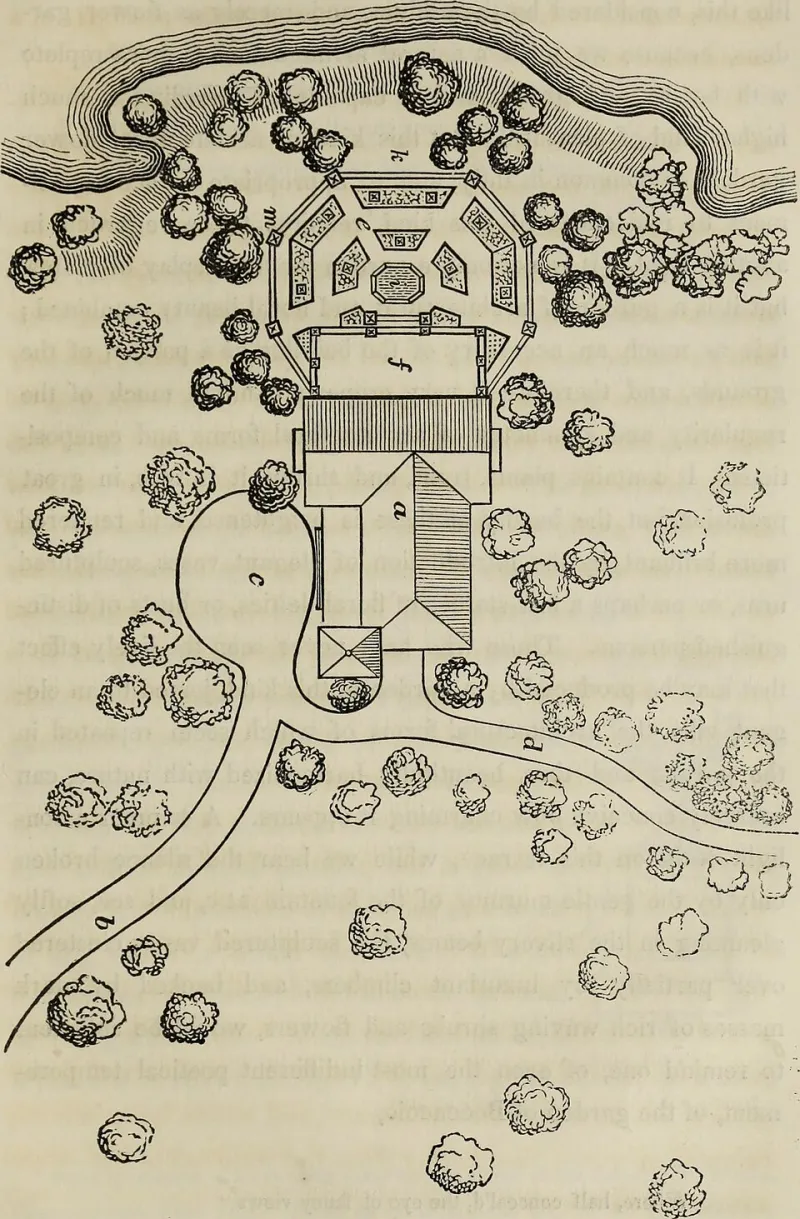
Photo: Downing, A. J. (Andrew Jackson), 1815-1852, No restrictions, via Wikimedia Commons
For most households, waste disappears down a pipe and is never thought about again. In the countryside it goes somewhere far more specific: into a tank in the garden, through a distribution chamber, and out into a drainage field that may be no larger than a modest parking space. Buyers who understand that arrangement before they exchange contracts are in a very different position from those who discover it afterwards.
The figure is often put at around four per cent of properties in England, with far higher proportions across parts of Wales, Scotland and the South West. It is not a niche concern, and it is certainly not a reason to walk away. It is, however, a reason to look properly.
A system, not a feature
Private drainage is often discussed as though it were a single object — 'the septic tank' — when it is really a chain of connected elements. A tank that is sound but connected to a saturated soakaway is no better than a tank that has failed. A treatment plant that is functioning correctly will still fail to meet its obligations if the discharge has never been registered.
A building survey should identify the presence and rough location of private drainage, comment on visible evidence of its condition, and flag where further investigation is required. What it cannot do — and no general survey can — is confirm that a buried soakaway is working or that a tank has been emptied on schedule. That requires a specialist drainage survey, and it is money well spent on any rural purchase.
The three arrangements you are likely to meet
Tank and soakaway. The traditional arrangement: solids settle, liquid passes to a drainage field or soakaway where it percolates through soil. Simple, with no moving parts, but entirely dependent on ground conditions. Heavy clay, a high water table or a field compacted by vehicles will all undermine performance.
Package treatment plant. A mechanical system that aerates and treats effluent to a higher standard, usually allowing discharge to a watercourse where a permit exists. It needs an annual service, occasional replacement of blower or pump components, and a power supply. Buyers often overlook that a treatment plant is a piece of machinery with a maintenance budget attached.
Cesspool. A sealed tank with no outlet, requiring emptying perhaps every few weeks. It is uncommon on domestic properties and expensive to run. If a survey identifies a cesspool, budget for the running cost before anything else.
The rules that changed, and why they matter at exchange
In England, the General Binding Rules for small sewage discharges have tightened the position considerably. A septic tank that discharges directly to a watercourse — a stream, ditch, brook or surface water drain — is no longer acceptable, and the expectation is that such a system is upgraded to a treatment plant. Solicitors and lenders routinely ask about this, and it is a point that should be resolved before contracts are exchanged rather than after.
New discharges generally require an environmental permit, and smaller discharges to groundwater may be registrable under an exemption. In Wales, Scotland and Northern Ireland the regulatory regimes differ in detail but the principle is the same: a discharge should be capable of being evidenced. If nobody can produce a permit reference, an exemption registration or correspondence from the regulator, treat that as an open question, not a formality.
Planning history is worth examining too. In areas affected by nutrient neutrality requirements, the drainage arrangements for a property can bear directly on what is permissible, and any consent attached to an extension or conversion should be read alongside the drainage documentation.
Red flags visible on a viewing
Much can be established without lifting a single cover. Note whether the ground above the drainage field is persistently soft or holding standing water. Look for an unnaturally vivid strip of grass following the line of a soakaway — a classic sign of surfacing effluent. Check for odour near windows, patios or the boundary. Slow-draining sinks, gurgling traps and toilets that rise before falling all point towards a system under strain.
Tanker access matters more than buyers expect. If the tank sits behind a gate too narrow for a heavy vehicle, or beyond a lawn that will not take the weight, emptying becomes awkward and more expensive. Clearance from habitable windows, boundaries, watercourses and any private water supply borehole should also be assessed.
Finally, consider what has been built over the system. Extensions, patios, driveways and outbuildings are frequently laid across drainage fields with no thought for what lies beneath. Building Regulations Part H in England and Wales sets out expectations on siting and capacity, and a system that no longer meets them is a negotiation point.
The paperwork that tells the story
Ask for the last three years of emptying records. A reputable contractor will have issued waste transfer notes, and the carrier should be registered. Service invoices for a treatment plant are equally valuable — an annual maintenance contract is a positive indicator, not a cost to be resented.
Where a system is shared with a neighbour, establish precisely how responsibility is divided. Is there a formal deed of easement or a right to drain? Is there a written maintenance agreement, and who arranges and pays for emptying? Informal arrangements that have worked for thirty years can become considerably less amicable when a five-figure replacement is required.
Costs, and how to use them
Replacement is rarely cheap. A new treatment plant, installed with the necessary permissions, commonly falls somewhere between £6,000 and £12,000 depending on ground conditions and access; a new drainage field can add several thousand more. A specialist CCTV and percolation survey typically costs a few hundred pounds.
That asymmetry is the point. Commission the survey, obtain the records, and if a defect is confirmed, negotiate on the basis of a written quotation rather than a guess. Vendors rarely respond well to vague assertions, but they respond reasonably to evidence.
A manageable responsibility
Private drainage rewards the buyer who asks straightforward questions early. It is a maintenance obligation rather than a hazard, and the overwhelming majority of rural homes manage theirs perfectly well for decades. The risk lies not in the system itself but in the gap between what a seller believes and what the ground, the paperwork and the regulator actually show. Close that gap before exchange, and the tank at the end of the garden becomes what it should be — an unremarkable part of everyday life.