Knotweed at the Boundary: A Calm, Evidence-Led Approach to Survey and Purchase
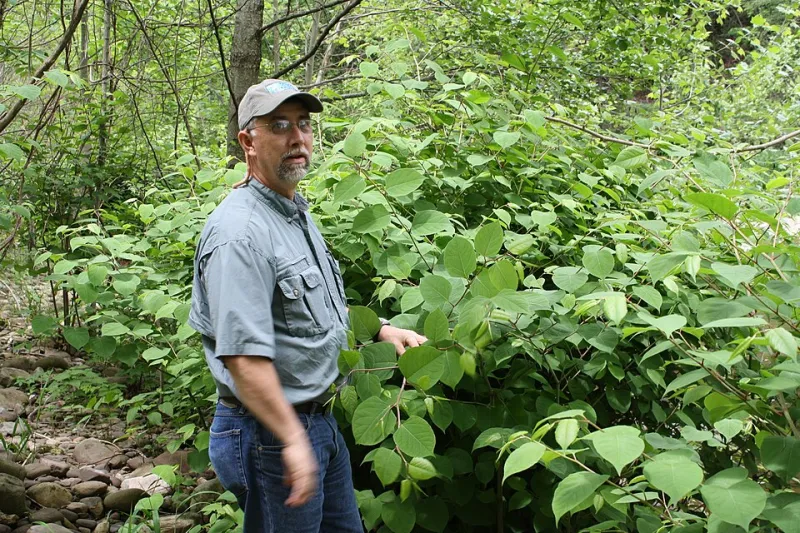
Photo: U. S. Fish and Wildlife Service - Northeast Region, Public domain, via Wikimedia Commons
Japanese knotweed is one of the most recognisable names in UK property risk. It is also one of the most frequently exaggerated. A survey that records knotweed, or growth near a boundary, does not automatically mean the purchase must fail. It means the buyer needs evidence, a realistic management plan and early confirmation from lenders and insurers.
What a survey can and cannot establish
A building surveyor can identify visible knotweed growth and record its location relative to the property and boundaries. In spring, red or purple shoots and rapid growth are characteristic. In summer, dense stands of bamboo-like canes and heart-shaped leaves are usually clear. In late summer, creamy flower spikes may appear. In winter, the growth dies back, leaving canes and crowns that are easier to miss. A visual survey cannot prove that no rhizome exists underground, nor can it define the full extent of an infestation without excavation or specialist investigation. The surveyor is reporting evidence and risk, not issuing a guarantee of absence.
Why proximity matters to lenders and insurers
Mortgage lenders and insurers apply their own policies. Some are concerned by knotweed within a certain distance of habitable accommodation, others by its presence anywhere on the property, and others by its proximity to a boundary. A common reference point is seven metres, but it is not a universal rule. The practical consequence is that a lender may decline, lend subject to a professional management plan, or require an insurance-backed guarantee. Insurers may exclude eradication costs or ask for specialist cover.
This is why early confirmation matters. Once knotweed is identified, the buyer should speak to their lender or broker before spending heavily on legal fees. A management plan prepared by a reputable specialist, with a guarantee, is often acceptable to lenders. The key is to establish what the specific lender will require rather than relying on general commentary.
A realistic remediation plan
Effective treatment is rarely a single visit. Herbicide programmes usually run over several growing seasons, often three to five years, with monitoring afterwards. Excavation and removal of contaminated soil is another route, but it is more invasive and must be done under controlled conditions. Root barriers can protect structures and boundaries in some situations. DIY digging is unwise because rhizome fragments can spread the problem.
A professional plan should include identification, a site-specific method statement, treatment dates, monitoring, disposal arrangements and a guarantee. Costs vary widely with the size of the infestation and access. Buyers should obtain itemised quotes and check whether the guarantee is insurance-backed and transferable.
Legal and practical considerations
Sellers in England and Wales are usually asked about Japanese knotweed on the TA6 property information form. Accurate disclosure matters. Knotweed is not unlawful in itself, but allowing it to spread onto neighbouring land can lead to council action under anti-social behaviour powers. If the property is leasehold, the lease and freeholder's approach to treatment should be checked. If the property is near a boundary, the buyer may wish to establish who is responsible for management.
Questions to put to the seller and specialist
Ask when the knotweed was first identified, what treatment has been carried out, who did the work and what guarantees exist. Request the management plan and any monitoring records. Ask whether neighbouring land is affected and whether the specialist has inspected the boundary. If no plan exists, obtain a quote before exchange so the cost is reflected in the purchase decision. These questions turn a vague concern into a defined liability.
Making an informed decision
The alarmist version of this story treats knotweed as an automatic blight. The evidence-led version is more useful. Many affected properties are bought, sold and insured once the risk is understood and managed. A City Surveys building survey will record visible growth and highlight where specialist advice is needed. The buyer's task is to obtain a clear survey record, a proper management plan and written confirmation from the lender. With those in place, Japanese knotweed becomes a known cost and a manageable risk rather than a reason for panic.