Stone, Statute and Survey: Buying a Listed Home With Your Eyes Open
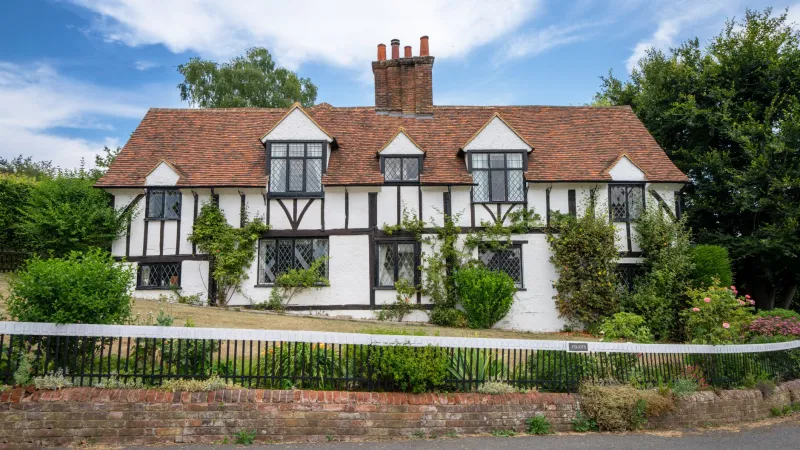
Buying a listed property can feel like taking on a set of rules you cannot see. The word 'listed' often conjures images of frozen time, expensive specialists and a conservation officer standing between you and a new kitchen. The reality is more measured. Listing is a designation of special architectural or historic interest, and it exists to protect character rather than to prevent change. For a buyer, the practical question is not whether a listed home can be altered, but how its historic fabric behaves, what has already been done to it, and what those choices mean for your budget.
A building survey is central to answering that question. On a listed home, the surveyor is not simply listing defects; they are reading a sequence of decisions made over decades or centuries. The aim is to give you a clear, calm picture of the property as it stands today, so that you can weigh the cost of ownership against the value of living in a piece of history.
What Listing Actually Protects
Listing protects the building as a whole, and its character and setting in particular. It does not mean that every internal fitting is sacrosanct, nor that ordinary maintenance requires permission. In England and Wales, listed building consent is needed for works that affect the character of the building as a building of special architectural or historic interest. In Scotland and Northern Ireland the principles are similar, with their own consent regimes. Minor Like-for-like repairs may fall outside consent, while replacement windows, external renders, roof coverings or internal subdivisions may not.
The grades matter less to a surveyor than the fabric itself, but they are useful context. Grade I and II* buildings, or Category A and B in Scotland, signal a higher level of sensitivity. A Grade II or Category C building still demands care, but there is usually more scope for sensible adaptation. What listing does not do is guarantee that past owners have treated the building well. That is where the survey begins.
How a Surveyor Reads Historic Fabric
Historic buildings are not uniform. They were built with materials that were expected to move, breathe and be repaired locally. A surveyor experienced with old buildings will look for evidence of how the structure has settled, where moisture is travelling, and whether later interventions have interrupted those natural processes. They will note the pattern of cracks rather than simply their width, and they will distinguish between old movement that has stabilised and recent movement that has not.
Reading the fabric also means identifying the sequence of alterations. A Georgian façade may conceal an earlier timber frame. A Victorian extension may have been built with a different mortar or roof structure. A twentieth-century damp-proof course may have been injected into walls that were never designed to be waterproofed in that way. Each layer tells you something about how the building has been treated, and each layer has implications for repair.
The Defects That Recur in Listed Homes
Damp is common, but the cause is often misunderstood. Many traditional walls rely on breathability: moisture enters and evaporates freely. When cement render, modern masonry paint or impervious pointing trap that moisture, it can migrate inwards, damaging plaster and timber. A surveyor will look for high ground levels, blocked airbricks, failed gutters and internal tanking as often as they look for rising damp.
Timber decay is another recurring theme. Roof timbers, floor joists and lintels can suffer where leaks or poor ventilation have gone unnoticed. Chimneys are a frequent source of trouble: unsound stacks, missing flaunching and blocked flues can let water in for years before a stain appears inside. Roof coverings, from stone slates to clay tiles, need inspection for slipped or failing sections, and gutters and downpipes deserve close attention because small overflows cause disproportionate damage in thick walls.
Structural movement should be assessed, not assumed. Old buildings often show distortion that has been present for centuries, and a surveyor will want to establish whether it is active. Cracks that follow mortar joints, out-of-plumb walls and dropped lintels are all evidence to be interpreted, not defects to be priced automatically.
Inappropriate Repairs From Previous Owners
One of the most useful things a survey can do is spot repairs that were well intentioned but unsuitable. Cement pointing over lime mortar is a classic example: it looks tidy, but it can trap moisture and erode the softer stone or brick around it. Injected damp-proof courses in solid walls are another. Replacement windows that ignore the original pattern, concrete floors laid without ventilation, and modern roof felts that seal rather than breathe can all create problems that are expensive to reverse.
These findings should not automatically end your interest in a property. They should, however, inform your negotiation and your budget. Reversing inappropriate work can be specialist, slow and costly, but it is often achievable. The important point is to know what you are taking on before you exchange contracts.
Consent, Cost and the Budget You Actually Need
Listed building consent is a process, not a punishment. For works that affect character, you will usually need to apply to the local planning authority, often with input from a conservation officer. Pre-application discussions are valuable. They can clarify what is likely to be acceptable and save you from designing a scheme that will not be approved.
Budgeting for a listed home requires a different mindset from budgeting for a modern house. Specialist trades are less plentiful, materials may need to be matched or sourced, and work often takes longer. A sensible contingency is higher than you might expect, commonly in the region of fifteen to twenty per cent of the anticipated repair cost. Some works may also require input from a structural engineer, an archaeologist or a heritage consultant. These costs should be factored in early rather than treated as surprises.
It is equally important not to be scared off by the label. Many listed homes are perfectly habitable and need only routine maintenance. The key is to commission a building survey that specifically addresses historic fabric, and to ask the surveyor to distinguish between urgent repairs, desirable improvements and items that simply need monitoring.
Before You Exchange: A Practical Checklist
Commission a surveyor with demonstrable experience of listed buildings, and ask for a report that comments on materials, breathability and past alterations. Request any available record of listed building consents and completed works from the seller. Speak to the local conservation officer about your intentions, even if they are modest. Obtain specialist quotes for any significant repair before you commit, and check that your proposed insurance cover is appropriate for a historic building.
A listed home is not a trap. It is a property with a longer memory than most, and it rewards buyers who take the time to understand it. With a clear survey and a realistic budget, the heritage label becomes what it should be: a mark of quality and character, rather than a source of anxiety.