What Lies Beneath the Lawn: Surveying a Home Above Historic Mineworkings
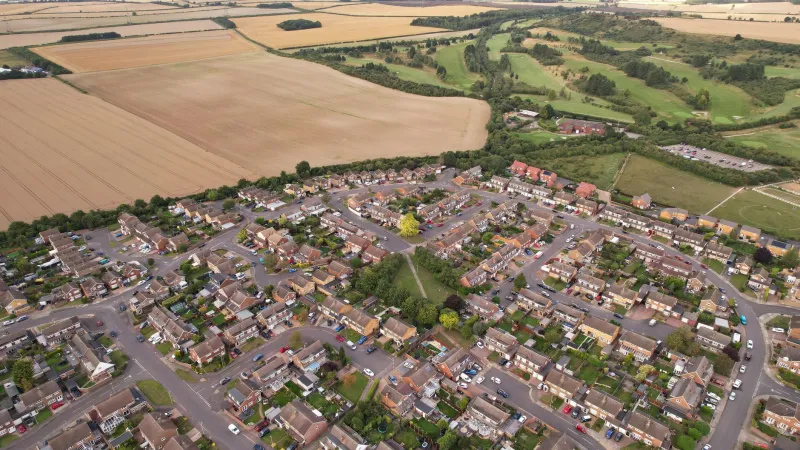
Buying a home is rarely a purely visual exercise. In the former coalfields that thread through parts of Yorkshire, the East Midlands, Durham, South Wales and beyond, the ground beneath a garden can carry a history that is not visible from the pavement. A property may sit near a recorded mine entry, above shallow workings, or in a district where old seams were worked long before the house was built. None of this automatically makes a home a poor purchase. It does, however, make evidence-led due diligence worthwhile.
The purpose of this guide is not to sow alarm. It is to explain how a buyer can move from vague concern about a mining past to a clearer understanding of the risks, the records and the practical steps that a solicitor and building surveyor will take.
Why a Mining Area Deserves a Measured Response
Mining has shaped the landscape and housing stock of many British towns. Entire communities grew around collieries, and thousands of homes were built on land that had already been worked, or near infrastructure linked to the industry. Since the widespread closure of deep mines in the 1980s and 1990s, much of that activity has ceased, but the ground can still retain physical evidence in the form of shallow workings, shafts, adits and spoil tips.
The key point is that risk is highly localised. A house on one side of a street may have no recorded features beneath it, while another nearby may sit close to a former mine entry. The majority of transactions in former mining areas proceed without incident. What matters is whether the specific property has been checked properly, and whether any recorded feature has been assessed by someone competent to interpret it.
The Searches That Ask the Right Questions
A standard local authority search is not designed to answer detailed mining questions. The main tool is the CON29M mining search, usually ordered by the buyer’s solicitor from a specialist provider. It draws on national mining records, including those held by the Mining Remediation Authority, formerly known as the Coal Authority, and reports on matters such as recorded shallow workings, mine entries, past subsidence claims and whether the property falls within a defined mining risk area.
Where the search identifies a potential issue, a further assessment may be needed. A Coal Mining Risk Assessment is commonly prepared for planning purposes, but the same evidence can inform a purchase. It considers the nature and depth of workings, the distance to recorded features, the geology and any remediation history. Buyers should ask their solicitor to order the mining search early, before exchange, and should not assume that an old search supplied by the seller is still sufficient.
Reading the Ground: Shafts, Adits and Shallow Workings
Mine entries take different forms. A shaft is a vertical opening, sometimes capped or filled, and sometimes recorded only from historic plans. An adit is a horizontal or sloping entrance driven into a hillside. Shallow workings are excavations close enough to the surface to have a potential effect on ground stability. The records are not always complete, particularly for small-scale or very old workings, which is why local knowledge and specialist interpretation matter.
The presence of a recorded feature is not, by itself, a verdict on the house. Distance, depth, ground conditions, the method of working and any subsequent treatment all affect the level of risk. A mine entry several hundred metres away is a different proposition from one recorded within the immediate curtilage. This is where a specialist mining report earns its place: it translates a record into an assessment of what it may mean for the property in question.
What a Building Surveyor Can—and Cannot—See
A building survey is a visual, non-invasive inspection. It cannot see a buried shaft or confirm the condition of a sealed adit. It can, however, identify the kind of structural evidence that warrants further investigation: cracking that follows a pattern rather than a single hairline, changes in floor or external levels, sticking doors and windows, separation at junctions, or repairs that suggest a history of movement.
A RICS Home Survey Level 3 is often appropriate for older or altered properties in mining areas, because it allows more detailed commentary on structure and ground-related movement. The surveyor may recommend a structural engineer, a mining specialist or a period of monitoring. It is also sensible to ask the seller for any previous reports, monitoring data, insurance claims or remediation records. A mortgage valuation is not a building survey and should not be treated as one.
Distinguishing Old Movement from Active Instability
Not every crack in a mining area is mining-related. Historic movement may have settled decades ago, while ongoing movement may have a different cause altogether, such as drainage, vegetation, poor ground or inadequate foundations. The surveyor’s task is to read the evidence as a whole rather than respond to a single symptom. The age and pattern of cracking, the relationship between internal and external evidence, and the history of repairs all inform the judgement.
Where movement appears recent or progressive, monitoring is often the next step. Crack gauges, tell-tales or level surveys carried out over several months can show whether movement is continuing. That evidence is valuable not only for the buyer’s decision but also for insurers and lenders, who may wish to see that the position has been properly investigated rather than assumed.
Insurance, Lending and the Question of Remediation
Buildings insurance in a former mining area deserves careful attention. Subsidence cover is commonly included, but policy terms, excesses and exclusions vary. Buyers should disclose what they know and obtain quotations before exchange where a material mining feature has been identified. Lenders may also require a specialist report or evidence of remediation before proceeding.
Remediation can range from further investigation and monitoring to drilling and grouting of shallow workings, capping or treatment of a mine entry, or ground improvement. Costs vary widely with the feature and access. The important point is that a disclosed and properly addressed mining issue is often more manageable than an unknown one. A specialist report should set out the evidence, the recommended action and the residual risk in plain terms.
A Sensible Way Forward
For a buyer considering a home in a former mining area, the practical sequence is straightforward. Ask the solicitor to order the mining search at the outset. Commission a building survey that matches the property’s age and complexity. Read the reports together, rather than in isolation, and ask follow-up questions where the evidence is unclear. If a recorded feature lies close to the house, obtain specialist interpretation before exchange rather than after completion.
An industrial past is part of the landscape of many British towns, not a verdict on every house within them. With the right searches and a surveyor’s measured eye, a buyer can approach a former mining area with calm, evidence-based confidence.